How to Wrangle Claude Code, New MCP Book Chapters, Agent Orchestration and More

I'm finally emerging (kind of) from the haze of the holidays, surgery recovery, and the entire household getting the flu with a bevy of news for you. We drove from Boston to Florida for the holidays to spend it with our family down there, spent a lot of time at the beach and the local bars and restaurants my wife and I spent lots of time at growing up. I bought myself a new surfskate for skating pools and pretending to surf and spent as much time as we could at the beach which, in true Florida fashion, included a paragliding Santa Claus raining candy canes on the bathers below.

While I was enjoying some much needed family and beach time, as well as a few all-too-rare dates with my wife, things were popping off in the AI world.
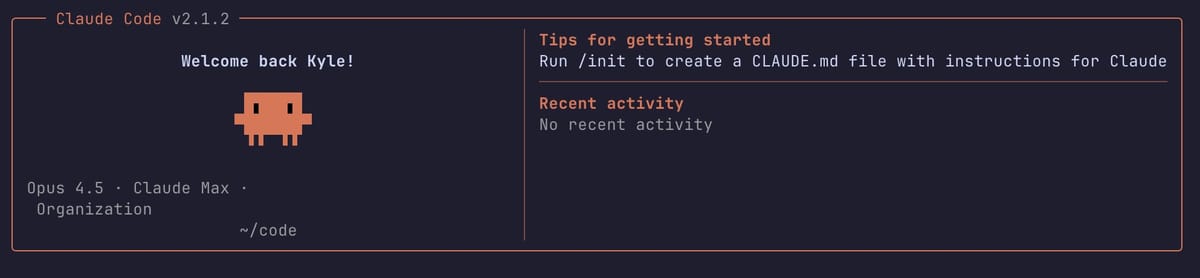
First, Claude Code and agentic coding really seemed to have come into its own in the past few months, and the winter break really accelerated things. Anthropic temporarily raised its usage limits, people started really figuring out and sharing best practice (have you Wiggum'ed yet? Installed ed3d's set of Claude Code plugins?), and more projects were publicly teaming up with agents like Claude Code to chew through their backlogs.
That's the force behind the Agentic AI Handbook, a huge collection of patterns for building and building with AI agents. There's something for everyone here, and worth using as a reference library when working on your own agents.
One of my teams adopted Claude Code over the break as well, which led me to develop a best practices guide for its use so they could very quickly become expert users. I was able to make it public, and you can now read the whole thing for free on my blog, The Edge Cases. It's huge so don't try to read straight through it. Pick at the parts you want to learn about and then use it as a reference guide when you want to learn a new...skill.
Memory agents are also getting a ton of love. Cameron Pfiffer at Letta (formerly MemGPT) has been building memory agents in public for almost a year now on Bluesky, the earliest and most popular being Void. There's a whole community of memory agents living on the ATProto network that has inspired more people to build their own.
It's even gotten to the enterprise – (this is an organic hand-made em-dash btw) I'm building a set of agents with a shared memory for an enterprise client right now using Mem0, but have been having a really fun time building Erebus, my bespoke personal assistant agent. It's still a work in progress and only kind of works right now, but keep an eye on it. You might find a useful pattern to build your own from.
Beyond individual agents, some people are learning how to orchestrate multiple agents to work either in series or in parallel and pushing orchestration to its absolute limits. The craziest project so far? Easily Gas Town from Steve Yegge. Part orchestration research, part bundle of Mad Max references, part city metaphor, it churns out far too much code and chews through way too many tokens but is an interesting exploration of the limits of cooperative coding agents.
In the MCP world, we saw the release of MCPB, or MCP Bundles, a standard way to package local MCP servers for one-click installation a la Chrome or VS Code extensions. This installation process will apply to any MCP client that implements the MCPB specification. And yes, that means a new section for the MCP book.
Speaking of the book, early release has come again! Chapter 6: Building MCP Servers: Advanced Use with Utilities and Integrating Client Capabilities is now available to subscribers of O'Reilly's learning platform!
And one last big announcement: Anthropic has officially donated MCP to the new AI Agent Foundation, a part of the Linux Foundation. This solidifies Anthropic's commitment to the wider community and for keeping MCP open and public. This is great news for anyone involved with MCP in any way, and for the long-term health of the protocol and ecosystem around it.


